What If You Slow Down and Let Yogyakarta’s Hidden Markets Speak?
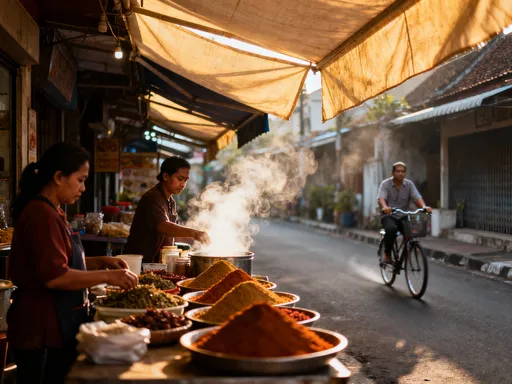
You know that rush of wandering through a city where every corner hums with life? In Yogyakarta, Indonesia, I discovered something unexpected: the real magic isn’t in the temples or tours—it’s in the quiet rhythm of its commercial streets. Slow travel here isn’t just a choice; it’s a doorway into the soul of the city. From bustling market lanes to neighborhood warungs, I learned to savor time—and trust me, the city gives back tenfold. The scent of clove cigarettes curls around dawn conversations. Vendors unfold wooden shutters like daily prayers. A woman arranges pyramids of turmeric and galangal with the care of a painter. These are not performances. They are rhythms passed down, lived, and quietly resilient. In a world obsessed with speed, Yogyakarta teaches a different way to see.
The Pulse of Everyday Commerce in Yogyakarta
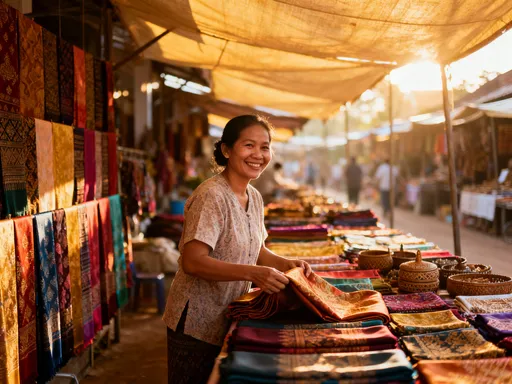
At first glance, Yogyakarta’s markets may seem chaotic—colorful stacks of batik, the clatter of metal scales, the overlapping calls of street vendors. But beneath the surface lies a deep, steady pulse that defines the city’s daily life. Unlike tourist-centric attractions, places like Beringharjo Market and the neighborhood pasar pagi—morning markets—are not staged for visitors. They are essential, alive, and deeply woven into the fabric of local existence. These commercial spaces are where families buy ingredients for breakfast, where artisans trade tools, and where elders catch up over steaming cups of jahe (ginger tea). The true rhythm of Yogyakarta is not found in guided tours but in the quiet choreography of commerce that unfolds each morning before the sun climbs high.
Beringharjo, one of the oldest and largest traditional markets in Java, stretches across several blocks in the heart of the city. Established in the 18th century, it has survived colonial shifts, economic changes, and modernization, yet it remains a thriving hub of daily exchange. Here, the air is thick with the scent of dried fish, sandalwood, and freshly ground coffee. Stalls overflow with hand-dyed fabrics, woven baskets, and medicinal herbs. But beyond the goods, it is the interactions that reveal the market’s soul. A grandmother haggles gently over the price of shallots, not out of necessity alone but as a ritual of respect and fairness. A teenage apprentice folds batik cloth with meticulous care, learning not just a trade but a cultural inheritance. These moments are not curated; they are lived.
Equally revealing are the smaller pasar pagi, which emerge in residential neighborhoods before sunrise and fade by mid-morning. These temporary markets are run largely by women who bring produce from nearby farms or prepare homemade snacks like klepon (pandan-flavored rice balls filled with palm sugar). They set up on sidewalks, under shaded awnings, or in quiet courtyards. The transactions are swift, familiar, and deeply personal. A regular customer doesn’t need to ask for her usual portion—her vendor already has it wrapped. This is commerce as community, where economic exchange is inseparable from social trust. For the slow traveler, these spaces offer a rare intimacy, a chance to witness life as it unfolds without performance.
What makes these markets transformative for visitors is not their visual richness alone, but the invitation to participate in time. When you slow down, you begin to notice patterns—the exact hour the tofu seller arrives with his cart, the way children stop by after school for sweet es teh, or how vendors pause for midday prayers. These rhythms are not listed in guidebooks. They are discovered only through presence. And in that discovery, the traveler moves from observer to witness, from outsider to temporary insider. The market, in its unguarded moments, becomes a mirror of the city’s heart.
Why Slow Travel Transforms Urban Exploration
In an age of curated itineraries and photo-chasing, slow travel stands as a quiet rebellion. It is not merely about spending more days in a place, but about changing how we engage with it. In Yogyakarta, this shift is most evident in the way time alters perception. A visitor rushing through Beringharjo Market to check it off a list will see only a blur of color and noise. But someone who returns each morning, sits on a low stool, and watches the light shift across the stalls will begin to see stories. The man who polishes antique silverware with a cloth worn soft by years. The young woman who sketches batik patterns in a notebook between customers. These are not attractions. They are lives.
Slow travel in an urban context reveals the invisible architecture of daily life. It allows you to see when the city wakes, when it rests, and when it reconnects. In Yogyakarta, this means noticing how vendors arrive before dawn, unloading crates from bicycles and motorbikes, arranging their wares with a quiet pride. It means learning that bargaining is not aggressive but conversational—a dance of mutual respect. A price is not fixed, but negotiated with smiles and small talk. A transaction might begin with “Ini berapa?” (How much is this?) but often ends with a shared laugh about the weather or a child’s school performance. These exchanges are not incidental; they are the social glue that holds the market together.
Moreover, slow travel fosters a deeper understanding of cultural continuity. In the artisan quarters near Prawirotaman, for instance, you might meet a batik maker whose family has practiced the craft for generations. If you visit once, you might buy a scarf and move on. But if you return, sit, and ask—Perlahan-lahan (slowly)—you might be invited to watch the canting process, where hot wax is drawn by hand onto fabric. You might learn that certain patterns are reserved for royal ceremonies, or that natural dyes are made from mango leaves and iron-rich mud. These details are not shared with every passerby. They are offered to those who show patience, who signal through presence that they are not just consuming, but seeking to understand.
The contrast with checklist tourism could not be starker. The rushed traveler sees a market as a box to tick: “Done. Batik purchased. Photo taken.” But the slow traveler sees it as a living system, constantly evolving yet rooted in tradition. They begin to recognize regulars, anticipate shifts in inventory, and even notice when a stall is closed—wondering, with genuine concern, if the owner is ill. This level of engagement transforms the city from a destination into a relationship. And in that shift, the traveler gains not just memories, but meaning.
From Tourist to Temporary Local: Blending Into the Marketplace Rhythm
One morning, after days of passing by the same warung on Jalan Sosrowijayan, I did something simple: I sat down. Not to eat, not to take a photo, but to drink coffee and watch. The woman behind the counter, wearing a faded batik blouse and a patient smile, handed me a small cup of kopi tubruk—strong, unfiltered coffee with sugar—and didn’t ask for payment right away. That small act of trust changed everything. Over the next week, I returned at the same time. I learned to say “Terima kasih” (thank you) with the right intonation. I pointed to the same drink instead of fumbling with phrases. And slowly, silently, I became part of the morning rhythm.
This is the quiet magic of repeated presence. In Yogyakarta, familiarity is not forced; it is earned through consistency. When you return to the same fruit stall, the same noodle vendor, or the same book cart, something shifts. The interactions grow warmer. Prices may not change, but the exchange deepens. A banana seller might hand you an extra piece “for your friend,” even if you’re alone. A batik vendor might pull out a piece from beneath the counter—“Ini khusus,” she says—“This one is special.” These moments are not about tourism. They are about recognition, about being seen not as a passerby but as someone who cares enough to return.
Language plays a subtle but powerful role in this transformation. You don’t need fluent Bahasa Indonesia to connect. A few phrases—“Satu, ya” (One, please), “Enak sekali” (Very delicious), “Sehat selalu” (Stay well)—open doors. Locals appreciate the effort, even when pronunciation wobbles. More than words, it’s the willingness to listen, to pause, to wait. In a culture that values harmony and respect, silence is not awkward—it is respectful. Sitting without rushing, speaking without dominating, observing without intruding—these are the gestures of a guest who honors the space.
Small rituals anchor this sense of belonging. For me, it was the morning coffee, the same plastic stool, the same view of motorbikes weaving through the wet pavement. For others, it might be buying bread from the same bakery, greeting the same guard at the market gate, or learning which vendor has the ripest mangoes on Tuesdays. These habits are not about convenience. They are about creating continuity in a transient experience. They allow the traveler to step out of the role of spectator and into a quieter, more humble role: that of a guest who is beginning to understand the rhythm of the house.
Mapping the Commercial Soul: Neighborhoods That Tell Stories
Yogyakarta’s commercial landscape is not monolithic. Each neighborhood carries its own economic and cultural signature, shaped by history, geography, and community. To walk through them slowly is to read the city’s biography in layers. Malioboro, the city’s most famous shopping street, is often crowded with tourists buying mass-produced souvenirs. But look closer, and you’ll see how it evolves. Older sections still host family-run batik shops where artisans work behind glass. Side alleys lead to food carts serving gudeg—the city’s signature sweet jackfruit stew—prepared using recipes passed down for decades. Malioboro is not just a tourist strip; it is a living corridor where tradition and modernity negotiate space.
Just south of the city center, Prawirotaman reveals a different facet. Once a quiet residential area, it has become a hub for independent designers, boutique galleries, and artisan collectives. Here, commercial activity is deeply creative. Small studios display hand-printed textiles, ceramic jewelry, and upcycled furniture. The vibe is relaxed, intentional, and community-oriented. Many shops double as cafes or workshops, inviting visitors to sit, sip tea, and watch a potter at the wheel. This is commerce as craft, where value is placed not on volume but on story, skill, and sustainability. The pace is slower, the exchanges more personal. A purchase here often comes with a conversation—about materials, about inspiration, about the challenges of keeping traditional techniques alive.
Further west, Kotabaru offers a quieter, more residential rhythm. Developed during the Dutch colonial era as a planned neighborhood, it retains wide streets, tree-lined avenues, and low-rise buildings. Today, it functions as a local trade hub, where residents buy household goods, school supplies, and daily groceries. The shops are modest, often family-run, and the pace is unhurried. A hardware store might also sell snacks. A tailor might repair school uniforms while chatting with neighbors. There are no tour groups here, no souvenir stalls. Yet, it is in places like Kotabaru that the city’s everyday resilience shines. The economy is not flashy, but it is steady, rooted in mutual support and long-term relationships.
When viewed slowly, these neighborhoods reveal more than where people shop—they show how they live. The layout of a street, the height of a counter, the placement of a bench—all carry meaning. In Prawirotaman, low tables encourage lingering. In Kotabaru, shared courtyards foster conversation. In Malioboro, the density of stalls speaks to centuries of trade. Architecture becomes narrative. Commerce becomes culture. And the traveler, moving through these spaces with attention, begins to read the city not as a list of sights, but as a living, breathing entity with memory and meaning.
The Art of Mindful Shopping: Beyond Souvenirs
In most tourist cities, shopping is transactional: money for goods, photo for memory. But in Yogyakarta, a different model is possible—one where commerce becomes conversation, and purchases carry purpose. Mindful shopping here is not about buying more, but about buying with awareness. It means choosing a batik scarf not because it’s cheap, but because it was hand-drawn by a local artisan who explains the symbolism of the parang pattern. It means buying spices not in a sealed plastic bag, but from a vendor who tells you how her grandmother used turmeric to heal wounds. These exchanges transform objects into vessels of story.
One afternoon, in a quiet lane off Jalan Prawirotaman, I stumbled upon a secondhand book cart shaded by a frangipani tree. The owner, a retired teacher, sorted through yellowed novels, old maps, and dog-eared poetry collections. We spoke in broken English and gestures. He showed me a 1970s guidebook to Java, its pages soft with age. “Dulu, orang belajar dari buku,” he said—“In the past, people learned from books.” I bought it not for nostalgia, but for the conversation it represented. That book was not a souvenir. It was a bridge.
Mindful shopping also means ethical engagement. It means paying fair prices, not haggling to the point of disrespect. It means carrying a reusable bag, refusing plastic, and supporting vendors who use natural dyes or grow their own produce. In Yogyakarta, many artisans are part of cooperatives that ensure fair wages and sustainable practices. Buying from them is not just a personal choice—it’s a small act of solidarity. It says: I see your work. I value your time. I honor your tradition.
Perhaps most importantly, mindful shopping shifts the focus from ownership to connection. When you buy a jar of homemade chili paste from a warung owner who shares her recipe, you’re not just acquiring a condiment—you’re participating in a chain of knowledge. When you commission a custom batik piece, you’re not just getting fabric—you’re co-creating a piece of art. These moments of exchange, small as they may seem, are where travel becomes transformative. They remind us that commerce, at its best, is not cold or mechanical, but warm, human, and full of meaning.
Practical Ways to Slow Down in a Busy City
Slowing down in a city like Yogyakarta does not require grand gestures. It begins with small, intentional choices. First, choose accommodations that place you within walking distance of markets and local life—guesthouses in Kotabaru or Prawirotaman, for instance, rather than high-rise hotels on the outskirts. Being close allows you to visit markets at dawn, when the air is cool and the crowds are thin, or in the late afternoon, when vendors begin to pack up and stories flow more freely.
Visit markets at off-peak hours. Early mornings offer a glimpse into the setup process—the unloading of crates, the arranging of flowers, the first pots of coffee brewed over charcoal. Late afternoons reveal a different rhythm: tired but satisfied vendors sharing snacks, children helping fold shutters, the quiet pride of a day’s work completed. These are the unguarded moments that guidebooks miss.
Carry a reusable bag, a small notebook, or a sketchpad. These simple tools signal a different kind of engagement. A notebook invites reflection. A sketchpad encourages observation. A reusable bag shows respect for local efforts to reduce plastic. And when you sit—on a low stool, on a curb, under a tree—stay a little longer. Listen to the rhythm of speech, the clink of coins, the laughter between neighbors. Ask gentle questions: “Ini nama apa?” (What is this called?), “Enak dimakan dengan apa?” (What’s it good to eat with?). Don’t rush the answers. Let the conversation unfold.
Finally, practice the art of returning. Visit the same stall two days in a row. Order the same drink. Smile at the same face. Familiarity builds trust. Trust opens doors. And through those doors, you gain access not just to goods, but to lives. These habits are not difficult, but they are powerful. They shift your role from consumer to participant, from visitor to guest.
Why This Matters: Rediscovering Humanity in Urban Travel
In the end, what Yogyakarta’s markets taught me was not about travel, but about being human. They reminded me that beneath the surface of any city—no matter how busy, how foreign, how different—there are people who wake, work, care, and connect in ways that echo our own lives. The woman who counts her coins at the end of the day, the man who teaches his son to weave, the teenager who dreams of opening her own shop—these are not exotic figures. They are reflections of us all.
Slow travel, especially in commercial spaces, restores a sense of shared humanity. It strips away the illusion that we are merely consumers, passing through. It replaces it with the truth that we are guests, temporary members of a community that allows us to witness, to learn, to grow. In Yogyakarta, this truth is not hidden. It is in the steam rising from a noodle cart, in the careful fold of a batik cloth, in the quiet nod of recognition from a vendor who now knows your face.
This way of traveling asks for presence, humility, and reciprocity. It asks us to listen more than we speak, to observe more than we photograph, to give as much as we take. It does not promise luxury or convenience. But it offers something deeper: connection. And in a world that often feels fragmented, that connection is a gift.
So the next time you step into a city, consider this: what if you didn’t rush? What if you let the markets speak? What if you slowed down, not to see more, but to see better? In Yogyakarta, I found that when you stop chasing experiences, they begin to find you. And in that stillness, the world opens—not as a destination to conquer, but as a living, breathing story, waiting to be shared.