How I Mastered Risk in Equipment Procurement — An Entrepreneur’s Real Talk
Buying equipment as a startup founder felt like walking a tightrope—excitement on one side, financial disaster on the other. I once nearly overextended my budget on a machine that promised big returns but came with hidden risks. That wake-up call forced me to rethink everything. In this article, I’ll walk you through the smart, battle-tested strategies I now use to control risk while still investing in the tools that grow my business. These are not theoretical concepts pulled from finance textbooks; they are lessons forged in real decisions, real dollars, and real consequences. If you’ve ever hesitated before signing a purchase order, worried about tying up too much capital or betting on the wrong technology, this is for you. Let’s explore how to invest with clarity, caution, and confidence.
The Hidden Dangers Behind Shiny New Machines
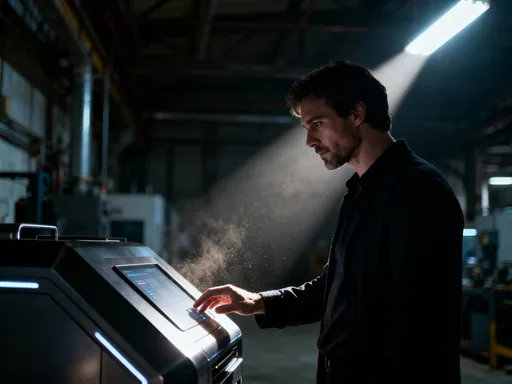
Every entrepreneur has felt the pull of a sleek, high-performance machine promising to transform operations overnight. The brochure shows faster output, lower labor costs, and seamless integration. Sales representatives speak in terms of revolution, not evolution. But beneath the polished surface, real dangers often lie hidden—dangers that don’t appear until months after the purchase, when budgets are strained and production lines stall. One of the most common pitfalls is overcapitalization: investing too much too soon in equipment that exceeds actual demand. This isn’t just inefficient—it’s financially dangerous. Capital gets locked into underutilized assets, depreciation eats into equity, and cash flow tightens without delivering proportional returns.
Another hidden risk is underutilization, which frequently follows emotional purchasing. A business owner sees a competitor adopt new technology and feels pressured to keep up. Without conducting a thorough needs assessment, they commit to a machine that runs only a few hours a week. The result? High fixed costs with minimal output. I’ve seen bakeries buy industrial ovens capable of producing 500 loaves a day when their peak demand is 80. The machine sits idle, rusting slightly each week, while loan payments continue. This isn’t growth—it’s debt disguised as progress. Emotional decisions, fueled by FOMO or sales pressure, often override rational financial planning.
Then there’s the issue of unexpected maintenance and repair costs. Many advanced machines rely on proprietary parts or specialized technicians, making routine service expensive and slow. A printer that promises high-speed output may require calibration every 500 prints, with each service call costing hundreds. What looked like a cost-saving investment becomes a recurring expense burden. Additionally, some equipment is built on rapidly evolving platforms. A 3D printer bought today might be incompatible with next year’s software updates, rendering it obsolete before it’s paid off. The key is to look beyond the initial promise and ask hard questions: What happens when it breaks? Can I afford the upkeep? Will this still be useful in three years? These are not signs of skepticism—they are signs of financial responsibility.
Why Risk Control Beats Cost Savings Every Time
When evaluating equipment, many entrepreneurs fixate on the sticker price. A lower upfront cost feels like an immediate win—a victory for the budget. But in reality, the cheapest option often carries the highest long-term cost. True financial wisdom isn’t about minimizing purchase price; it’s about minimizing risk. A machine that breaks down frequently, requires constant repairs, or disrupts operations creates hidden expenses that far exceed the savings from a low initial investment. Downtime alone can be devastating. For a small manufacturer, an hour of halted production might mean missed deadlines, unhappy clients, and lost future business. The real cost isn’t in the machine—it’s in the interruption.
Consider two businesses in the same industry: one bought the lowest-priced packaging machine available, while the other invested 20% more in a model with a proven track record of reliability and included service support. At first glance, the first business appears to have saved money. But within six months, their machine required three major repairs, each taking days to resolve. Technicians were hard to schedule, parts had to be shipped from overseas, and production fell behind. Meanwhile, the second business experienced minimal downtime. Their machine came with a service contract, and preventive maintenance was scheduled quarterly. When minor issues arose, they were resolved quickly. Over two years, the so-called “expensive” machine actually delivered lower total cost of ownership because it performed predictably and consistently.
This contrast reveals a critical truth: reliability is a financial asset. A machine that runs smoothly contributes directly to revenue stability. It allows for accurate forecasting, consistent delivery, and customer satisfaction. On the other hand, a problematic machine introduces volatility—something every business should strive to eliminate. Risk control, therefore, isn’t a defensive strategy; it’s a growth enabler. By choosing equipment with lower operational risk, entrepreneurs create a foundation for scalable, sustainable operations. The goal isn’t to spend less—it’s to lose less. And in the long run, losing less means earning more. That’s the real return on investment.
The 3-Step Due Diligence Framework I Swear By
After my early missteps, I developed a simple but powerful framework to evaluate every equipment purchase. It consists of three steps: verify, test, and audit. This process removes guesswork and reduces the influence of sales pressure. It’s not complicated, but it’s thorough—and skipping any step has cost me in the past. The first step is verification. Too often, buyers accept technical specifications at face value, trusting the sales representative’s word. But salespeople are incentivized to close deals, not to highlight limitations. I now insist on independent verification of key specs. For example, when considering a commercial dishwasher, I hired a third-party technician to review the water pressure, cycle time, and energy consumption claims. The results? The machine used 30% more water than advertised. That single finding changed the entire cost-benefit analysis.
The second step is testing. No brochure or video can replicate real-world performance. I now require a live demonstration under conditions that mirror my actual operations. If possible, I arrange a short-term rental or trial period. For a recent label printer purchase, I rented the machine for two weeks and ran it through our busiest shifts. We tested different label types, print speeds, and batch sizes. This revealed a critical flaw: the machine jammed frequently when handling thicker materials, something the sales demo didn’t show. Without this test, I would have committed to a machine that failed under real demand. Testing transforms assumptions into evidence. It’s the difference between hope and certainty.
The third step is auditing the supplier. A machine is only as good as the support behind it. I evaluate the supplier’s reputation by reviewing customer feedback, checking response times, and speaking with other business owners who’ve made similar purchases. I also assess their service network: Are technicians available locally? Do they stock spare parts? What’s their average repair turnaround? One supplier offered an excellent price but had no service presence in my region. The nearest technician was a 12-hour drive away. I walked away, even though the machine was 15% cheaper. A reliable supplier can mean the difference between a two-hour fix and a two-week shutdown. These three steps—verify, test, audit—form a disciplined approach that turns emotional decisions into informed choices. They don’t guarantee perfection, but they drastically reduce the chance of costly mistakes.
Financing Smarter: How Leasing Can Protect Your Cash Flow
For many entrepreneurs, the biggest fear isn’t choosing the wrong machine—it’s losing too much cash on the right one. Paying upfront ties up capital that could be used for marketing, hiring, or inventory. That’s where leasing becomes a strategic advantage. Instead of spending tens of thousands in one go, leasing allows for predictable monthly payments, preserving liquidity and maintaining financial flexibility. This is especially valuable for equipment with high depreciation or rapid technological change. A computer-controlled cutting machine might lose half its value in three years. Buying it outright means absorbing that loss. Leasing, however, shifts the depreciation risk to the lessor. At the end of the term, you can return it, upgrade, or negotiate a purchase at fair market value.
Leasing also provides protection against obsolescence. In industries like printing, packaging, or digital fabrication, new models emerge frequently with improved features. A leased machine allows you to stay current without constant capital outlays. Many lease agreements include upgrade options, so you can transition to newer technology seamlessly. This isn’t just convenience—it’s competitive advantage. Businesses that can adapt quickly are more resilient in changing markets. Additionally, lease payments are often treated as operating expenses, which can offer tax benefits by reducing taxable income in the current year. This contrasts with large capital purchases, which require depreciation over time and offer slower tax relief.
But leasing isn’t always the answer. For equipment that will be used daily over many years—like a commercial oven or industrial sink—buying may be more economical in the long run. The key is to match the financing method to the equipment’s lifecycle and usage pattern. As a rule of thumb, I lease when the technology is fast-evolving or when usage is uncertain. I buy when the machine is durable, essential, and expected to last a decade or more. This approach ensures that financial decisions align with operational reality. Financing isn’t just about payment terms—it’s about risk allocation. And in business, controlling risk is the first step toward lasting success.
Building Exit Options Into Every Purchase
Most equipment purchases are treated as final decisions, but the smartest ones are made with an exit strategy in mind. A machine isn’t just an asset—it’s a future liability if you can’t dispose of it efficiently. That’s why I now negotiate exit options before signing any contract. These include resale rights, buyback agreements, and trade-in clauses. They transform a fixed investment into a flexible one. For example, when purchasing a commercial sewing machine, I negotiated a guaranteed residual value clause with the supplier. After three years, I could sell it back at 60% of the original price, regardless of market conditions. This wasn’t standard, but I made it a condition of the deal. When I upgraded, I recovered far more than I would have through an open market sale.
Trade-in programs are another valuable tool. Some suppliers offer credits toward new models when you return old equipment. These programs are especially common in industries like construction, printing, and medical devices. By planning for trade-ins early, businesses can reduce the cost of future upgrades and avoid the hassle of selling used machinery. Resale rights are equally important. Some leases restrict your ability to sell or transfer equipment. I always ensure that any agreement allows for resale, even if I don’t plan to use it. This maintains optionality. In one case, a sudden shift in demand made a piece of equipment redundant. Because I retained resale rights, I sold it within weeks and reinvested the funds into a more urgent need.
These exit strategies do more than protect capital—they create agility. They allow businesses to adapt to changing conditions without being weighed down by obsolete assets. In a dynamic economy, flexibility is a form of financial strength. By building exit options into every purchase, entrepreneurs turn equipment from sunk costs into strategic tools. The goal isn’t just to buy well—it’s to sell wisely. And in the long run, the ability to exit gracefully is just as important as the decision to enter.
The Role of Insurance and Warranties in Risk Mitigation
Warranties are often treated as an afterthought, a box to check before signing. But in reality, they are a core component of financial risk management. Not all warranties are equal. A one-year parts-only warranty offers minimal protection. A five-year comprehensive warranty with on-site service and loaner equipment can be a game-changer. I learned this the hard way when a critical compressor failed during peak season. The standard warranty covered parts but not labor, and the nearest technician was two weeks out. Production halted. Revenue dropped. Since then, I’ve made warranty terms a top priority in every purchase decision.
I now look for extended warranties that include preventive maintenance, rapid response times, and coverage for both parts and labor. Some suppliers offer service packages that bundle regular inspections, software updates, and emergency support. These aren’t luxuries—they’re operational safeguards. For a recent purchase, I paid 12% more for a premium service plan. Within eight months, a software glitch caused a system-wide pause. The supplier dispatched a technician the next day and provided a temporary unit to keep operations running. The cost of downtime would have far exceeded the extra investment. Preventive maintenance, included in the plan, also identified a failing component before it caused a breakdown. That single intervention saved thousands.
Third-party insurance is another layer of protection, especially for high-value or mission-critical equipment. Policies can cover accidental damage, power surges, or even business interruption. While not always necessary, they provide peace of mind in unpredictable environments. I now treat warranty and insurance decisions with the same seriousness as price and performance. They are not add-ons—they are integral to the total cost of ownership. A machine with a low purchase price but high repair risk is not a bargain. A machine with strong support and coverage is an investment in stability. In business, certainty has value. And the right warranty turns uncertainty into control.
Scaling Without the Overload: Matching Equipment to Real Demand
Perhaps the greatest financial risk in equipment procurement is overestimating future demand. Entrepreneurs dream big—and they should. But dreams must be grounded in data. Buying a machine designed for 10,000 units a month when you’re selling 1,000 creates immediate financial strain. The machine underperforms, the loan payments loom large, and cash flow suffers. I’ve seen businesses fail not because they lacked vision, but because they scaled too fast. Sustainable growth comes from alignment: matching equipment capacity to actual, verified demand.
My approach now is phased acquisition. I start small, using existing equipment or short-term rentals to test market response. Once I have real sales data and consistent demand, I invest in a machine that meets current needs with a small buffer—never a massive leap. For example, when expanding my packaging line, I began with a semi-automatic machine that doubled our output. After six months of strong sales, I upgraded to a fully automated system. This incremental strategy reduced financial pressure and allowed me to refine processes before committing to large capital. It also gave me time to train staff and optimize workflows, preventing operational bottlenecks.
Data is the foundation of this approach. I track capacity utilization rates, seasonal trends, and customer order patterns. If a machine runs below 60% capacity for three months, I investigate—either demand is lower than expected, or there’s an operational issue. This metric keeps me honest. It prevents emotional upgrades and ensures that every purchase is justified by performance, not hope. Scaling isn’t about having the biggest machine; it’s about having the right machine at the right time. By aligning investment with reality, businesses can grow steadily, avoid overextension, and maintain financial health. The goal isn’t to impress competitors—it’s to outlast them.
Conclusion
Equipment procurement isn’t just a transaction—it’s a strategic financial decision that can make or break a growing business. Every purchase carries risk, but risk can be managed, mitigated, and even turned into advantage. By shifting focus from upfront cost to long-term control, entrepreneurs protect their most valuable resource: cash flow. The real profit isn’t in the machine itself, but in the wisdom of how you acquire it. From rigorous due diligence to smart financing, from exit planning to comprehensive warranties, every step shapes the financial outcome. These strategies aren’t about playing it safe—they’re about playing it smart. They allow for bold moves without reckless exposure. In the journey of building a business, confidence comes not from spending more, but from spending wisely. And that wisdom, more than any machine, is what drives lasting success.